Seamless Healthcare Data Integration - Building an ETL Pipeline with FHIR APIs
This website showcases the development of an ETL pipeline for integrating healthcare data using FHIR APIs, highlighting practical use cases and technical solutions for seamless interoperability.
Project maintained by surapureddy06 Hosted on GitHub Pages — Theme by mattgraham
BPMN Model Page
| Home | |
| BPMN Model | |
| Use Case Model | |
| ETL Pipeline | |
| Insights | |
| About |
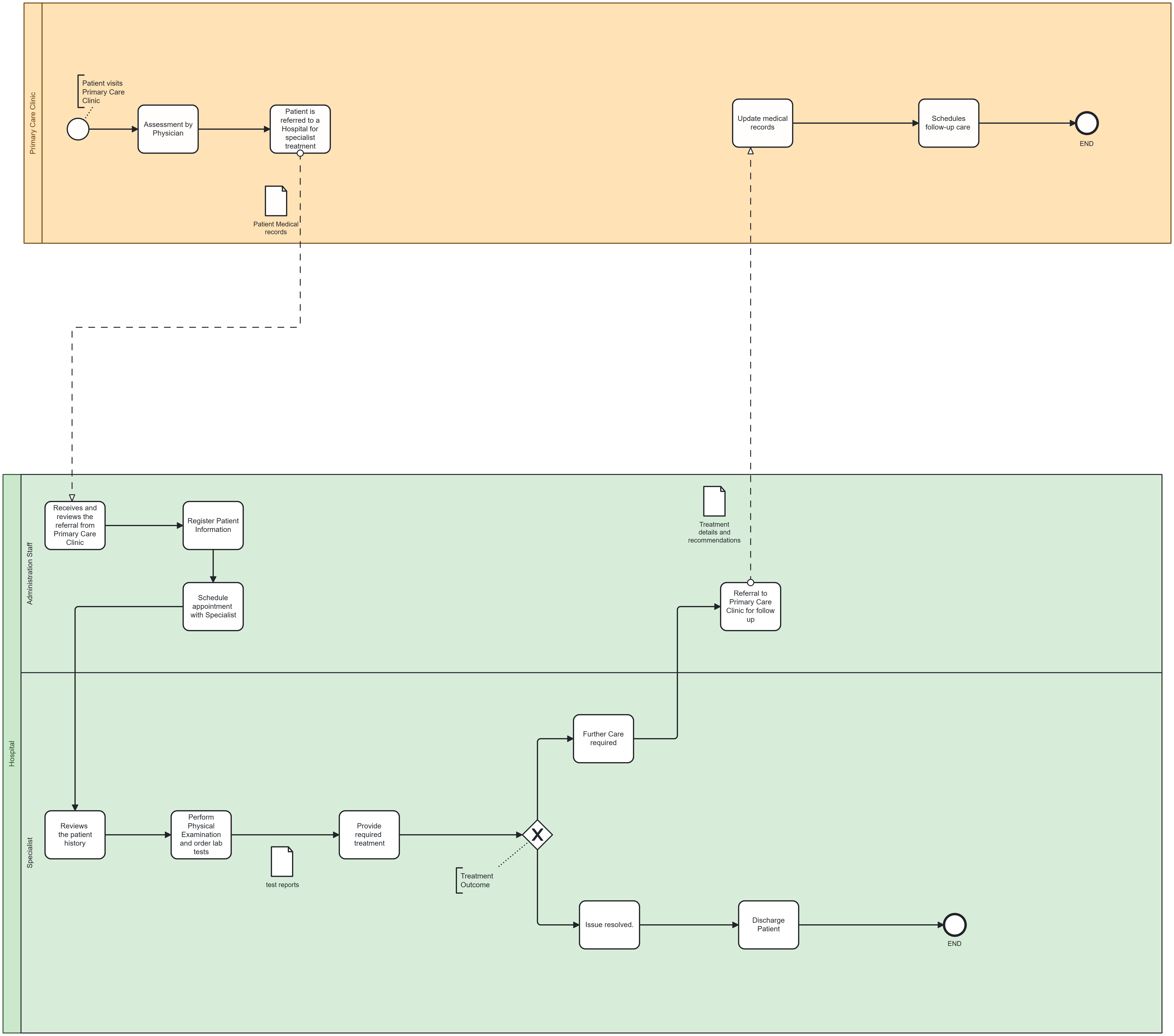
BPMN Model Explanation
The BPMN model represents the workflow of a patient’s journey through the healthcare system, starting from their visit to a Primary Care Clinic to receiving treatment and follow-up care. It involves three key participants: the Primary Care Clinic, Administrative Staff, and Hospital Specialists.
Workflow Steps:
- Primary Care Clinic:
- The patient visits the clinic and is assessed by a physician.
- If further treatment is required, the patient is referred to a hospital specialist, and their medical records are updated.
- The clinic schedules follow-up care based on the treatment plan.
- Administrative Staff:
- Upon receiving the referral, the staff registers the patient’s details in the hospital system.
- They schedule an appointment with the appropriate specialist and provide treatment-related documents as needed.
- Hospital Specialist:
- The specialist reviews the patient’s medical history, conducts necessary examinations, and performs diagnostic tests.
- Based on the results, the specialist provides treatment and monitors the outcomes.
Key Decisions:
- After treatment, a decision is made on whether the issue is resolved:
- If resolved: The patient is discharged with follow-up recommendations.
- If unresolved: The patient continues care within the hospital or is referred back to the Primary Care Clinic for follow-up.
Benefits of the Workflow:
- Ensures seamless communication and coordination between the Primary Care Clinic, hospital staff, and specialists.
- Facilitates efficient documentation and treatment planning.
- Enhances patient care by minimizing delays in diagnosis and treatment.
This BPMN model showcases a structured approach to managing patient care across multiple stakeholders, highlighting the importance of clear roles, proper documentation, and effective decision-making.